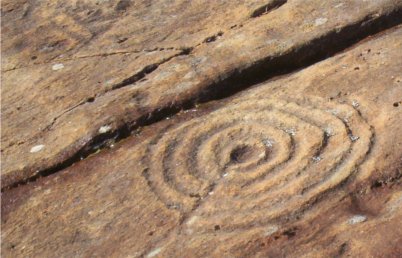
5000 year old rock art.
All pics from tour.
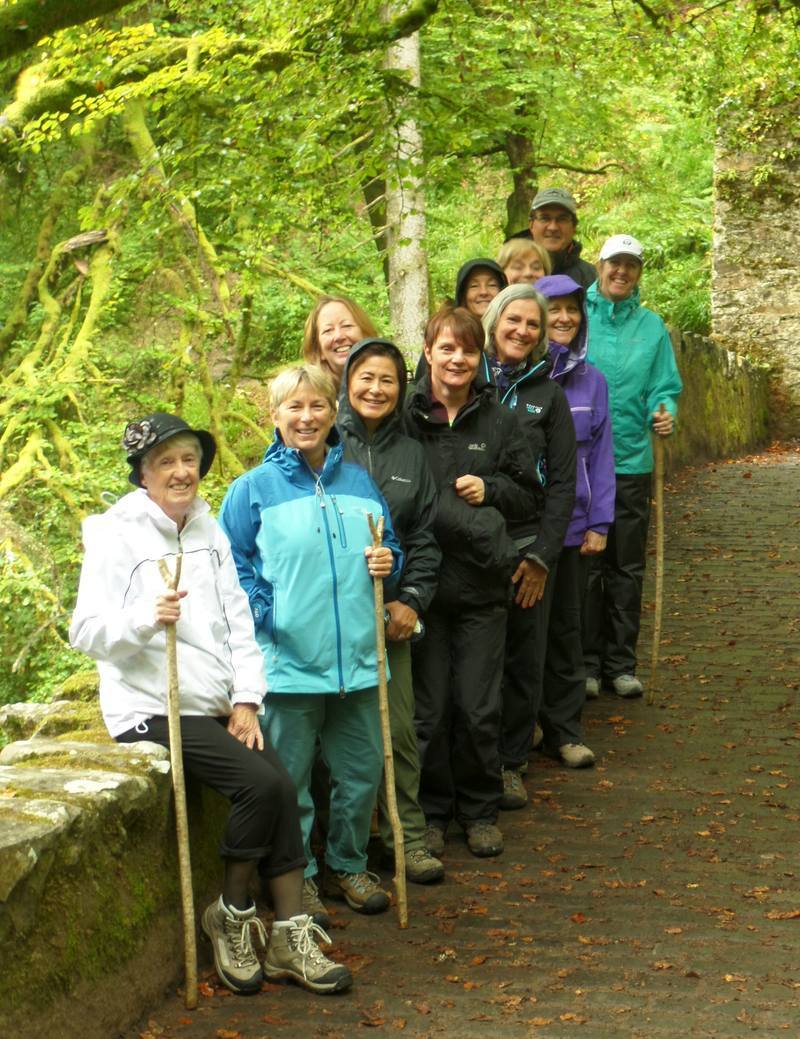
The Homage to Poetry
The Pilgrimage
Embark on an unforgettable 13 day odyssey to some of the most energetic sacred sites across Scotland. This pilgrimage visits four distinct regions - two coastal, two mainland.
- Gentle Coastal: the megalithic wonders of Kilmartin Glen, the holy island of Iona.
- Mountainous Coastal: the tourist-free sacred places on The Isle of Skye.
- Highlands: from the glens dedicated to the Goddess to waterfalls belonging to water-deities to a Fairy Hill.
- Lowlands: Rosslyn Chapel.
You will explore the native spiritualities from 6000 years ago, through the Bronze and Iron Ages, the early Celtic Christians and more modern expressions, sites and practices.
5000 year old rock art.
All pics from tour.
Travel with a small group of six to eight like-minded people to the sacred places in a land of incomparable beauty and contrast. We journey from the rich Lowlands of Rosslyn Chapel near Edinburgh to the rugged seascapes and islands of the West Coast and back, following the ancient creators of Scotland's unfolding story, those who have left their signatures on the land in the form of Neolithic stone circles and cairns, medieval abbeys, and imposing castles. You will also learn about the sacred in the everyday: prayers and rituals around cooking, farming, storytelling and the seasons. You'll be guided by a Highland tradition keeper (a Seanachaidh). Hearing the oral history of the inhabitants will add a diffferent facet to your understanding. Tale and landscape blend to reveal the sacred ways in which our ancestors revered the many and varied faces of Spirit. Our journey through sacred Scotland will truly be a pilgrimage of the soul.
Tour History
My friend, the well known writer and teacher of Celtic spirituality, Mara Freeman, created the
Spirit of Scotland tour.
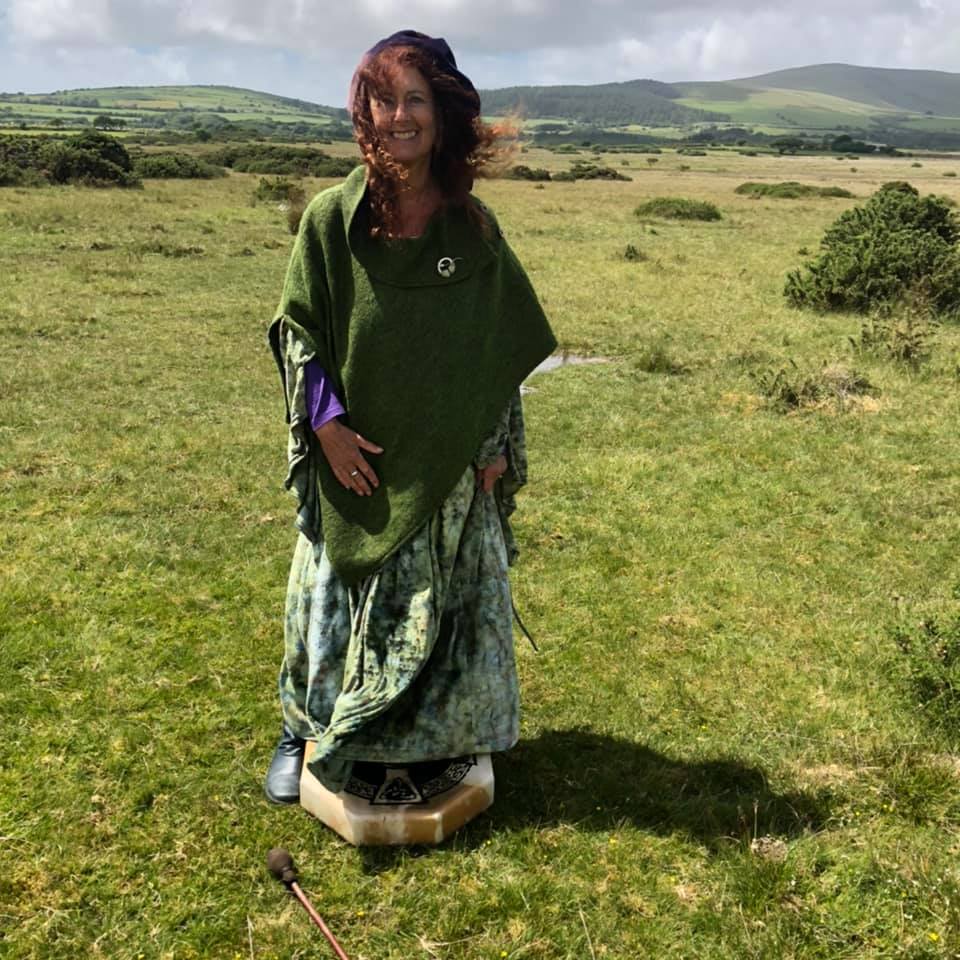
Mara Freeman
For many years Mara organised the tour, with me as the main guide.
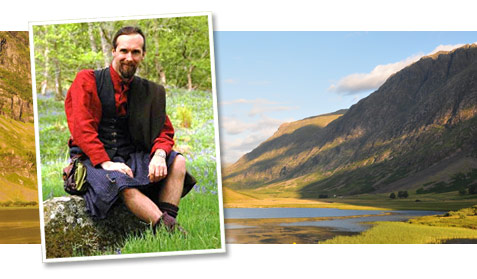
Scot AnSgeulaiche
In 2021 Mara retired from touring, so I have taken on the role as organiser as well. With thanks to Mara for all her work, the Spirit of Scotland continues!
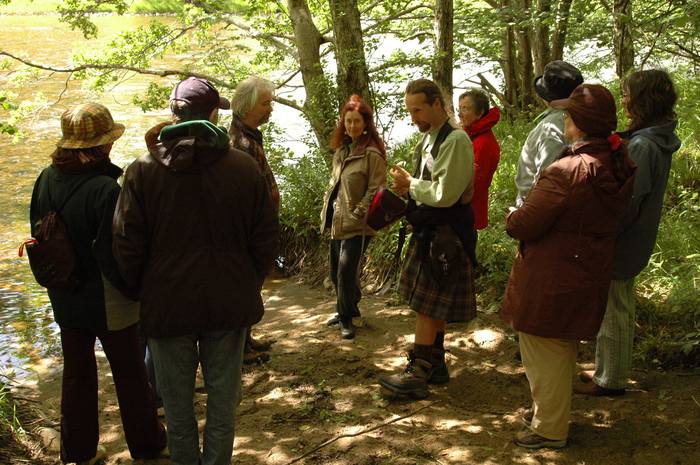
Mara and Scot guiding on the Spirit of Scotland 2008
The Itinerary


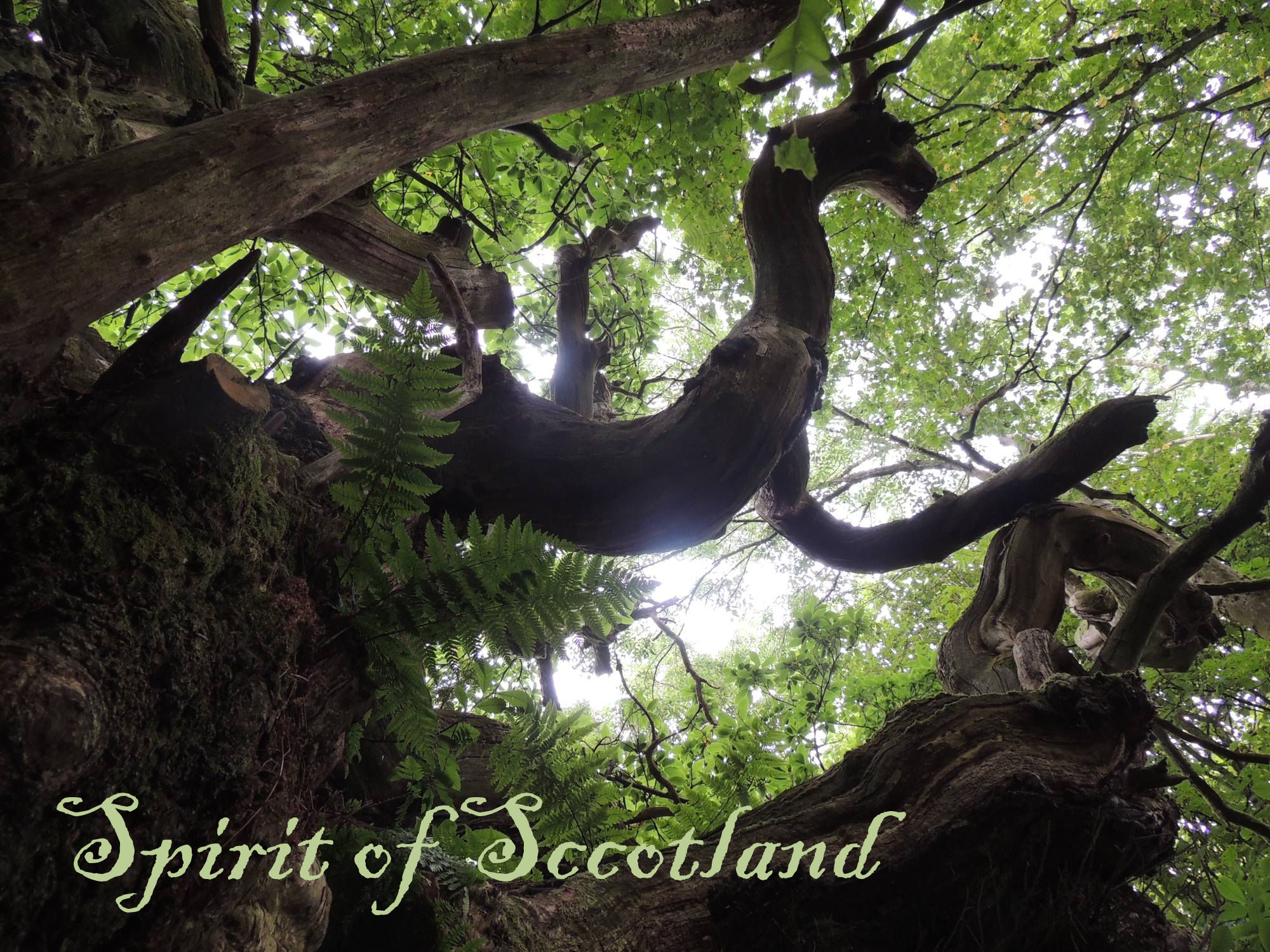
The dragon tree of Rosslyn Glen
Day One
We meet in Edinburgh and the journey begins! We visit the exquisite Rosslyn Chapel, steeped in stories of the Knights of the Crusade, begining with a walk in beautiful Rosslyn Glen, a place almost entirely overlooked by Chapel visitors, but a part of Rosslyn's beauty and story. The chapel at Rosslyn was famous long before Dan Brown wrote that book. It has some of the most elaborate carvings in any European church and is a wonder to behold.
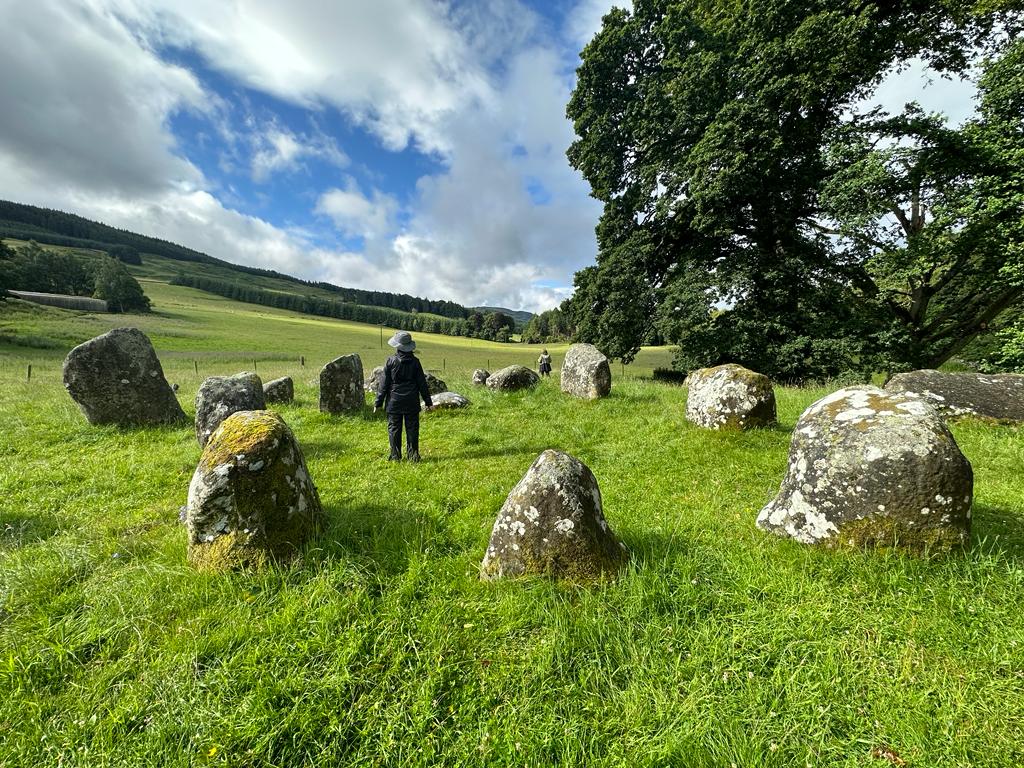
Contemplating the Stone Circle
We journey North by West this afternoon, into the Highlands of Scotland, stopping at a place that offers a homage to Celtic ancient poetry, the arts being so much a part of the spirit of Scotland. To set the scene, we'll visit our first stone circle, one that is largely forgotten and rarely visited. Your first night will be in a pretty Highland town, the haunt of na h-Uruisgean (water dieties).
Days Two and Three
We get remote for the next two days as we journey into the very heart of the Highlands. You'll hike to an abandoned village where a famous seeress once lived. You'll hear some of her prophetic words (translated into English). We'll visit a stone circle where we can introduce David Cowan's work on ley lines and telluric energy. Many of the sites have active energy, Telluric, as David calls it, so if you have that sensitivity, you can test out his work.
We'll visit a reconstructed Iron Age village (which I helped to build) to give you a sense of the domestic, the everday lives of the people whose spiritual practices you are investigating. In the afternoon, I'll hike up a gorge associated with the water dieties. You can join me or if you prefer, spend time in the town, or in our beautiful lodging to journal.
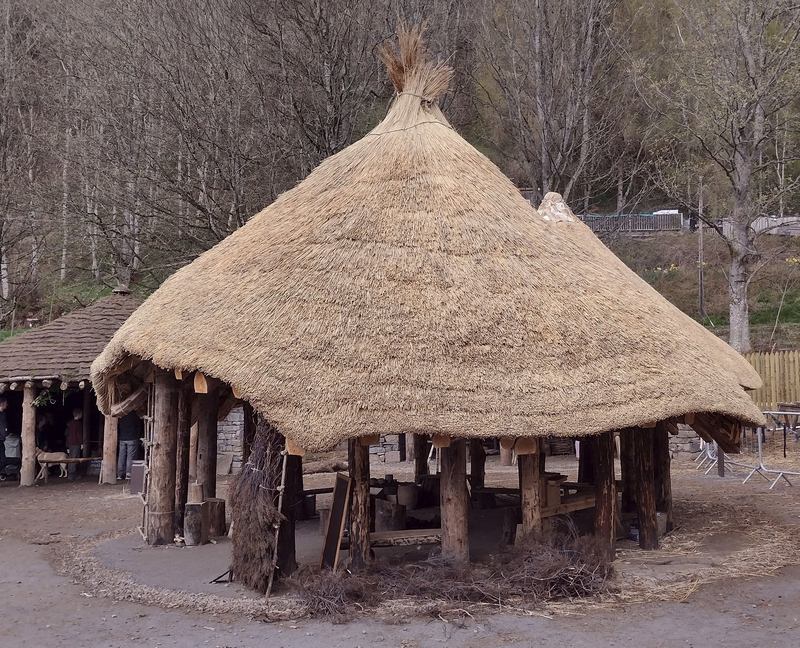
The Iron Age village
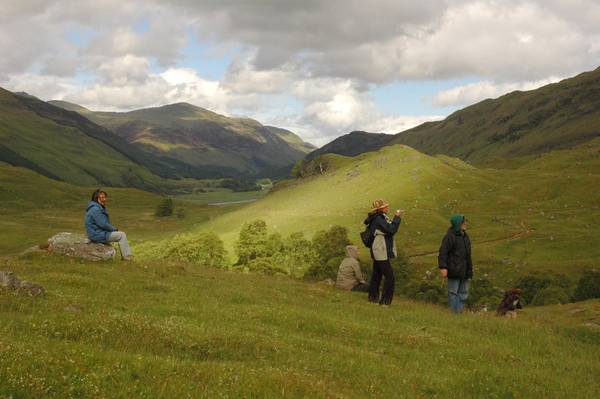
Contemplating the Beauty
The second day will be spent in a place that is known in Gàidhlig as The Long Crooked Glen of the Stones, one of Scotland's hidden gems (which is why I don't give its map-name here) with a dense collection of sites spanning several thousand years along the glen's thirty mile length, including one of the world's great, ancient trees. We'll translate local place names to identify the early Celtic Christian Saints' settlements in the Glen. Much that is hidden to the stranger's eye will be revealed. There will be a one hour hike up a mountain to an unmarked holy site. Well worth the climb.
Day Four
Today we drive through some of the remotest parts of the Highlands towards Scotland's West Coast. Along the way we'll stop at a waterfall celebrated in poetry and a poet celebrated in stone, both tying to our theme of spirituality found in the landscape and in the Celtic arts. The views today will be dramatic, fearsome, intimidating even.
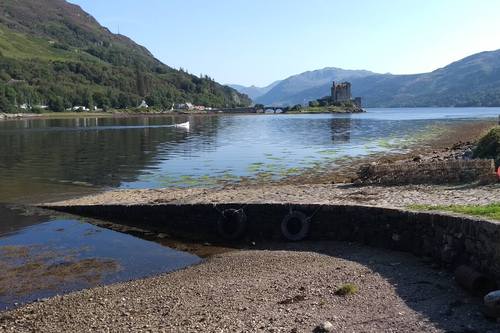
Viking Land and Sea
Having journeyed far, we come to rest amidst the Viking territory of the Eilean a'Cheò, the Isle of Skye. We sleep with our feet almost in the ocean in one of the most serene places on the west coast.
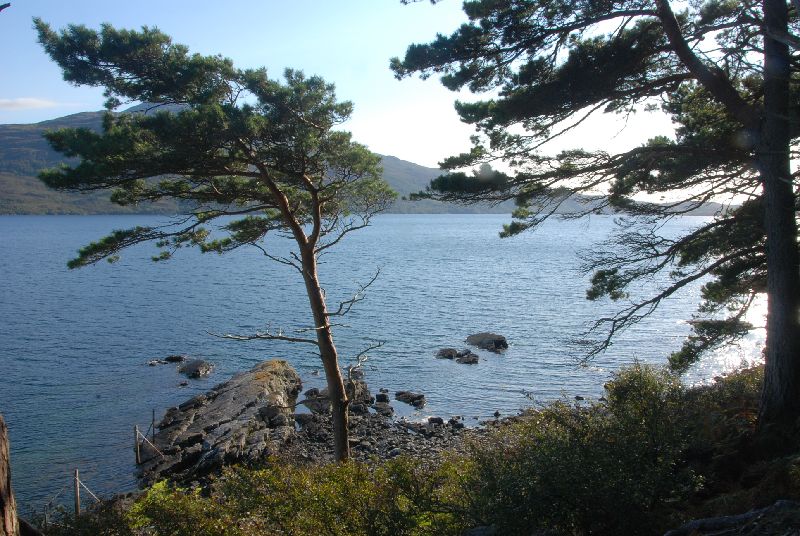
Our West Coast accommodation
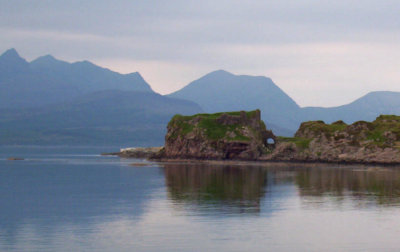
The Warrior Goddess's territory
Day Five
Today you'll see some of the Isle of Skye's most hidden and special sacred sites. If you're looking for the Fairy Pools, Fairy Glen or Neist Point, then this is not the tour for you: join the huge crowds on the many tourist busses for which Skye is now known! For today we go to hidden and largely unknown parts of the island, ones that I don't name for good reason. We'll cross the sea by boat to arrive on Eilean a'Cheò, that being the most dramatic and appropriate way to reach this Isle of Mist (as Skye is known in Gàidhlig). We will begin in a remote glen to visit a ruined Iron Age dwelling. You will find a distractingly beautiful landscape - amidst which you'll visit the home of a Warrioress Goddess, a neolithic solar observatory, an early Celtic Christian holy well and other places of long-standing pilgrimage... Wear your hiking boots as the path to this Warrioress's door is often boggy and exposed to the weather: this is a pilgrimage, after all, and a pilgrimage is not meant to be easy. If it were easy, there would be no reward.
Day 6
Having gone so far north, we must journey south into Argyll, still on the West Coast, but quite different from Skye, both culturally and in landscape. Along the way we'll find time to get a taste of why Glencoe has so many Goddess-in-the-Landscape associations. We'll also hike into the mountain home of the Goddess of the Storms where you can contemplate one of the oldest dieties in Europe, and perhaps meet her goats!.
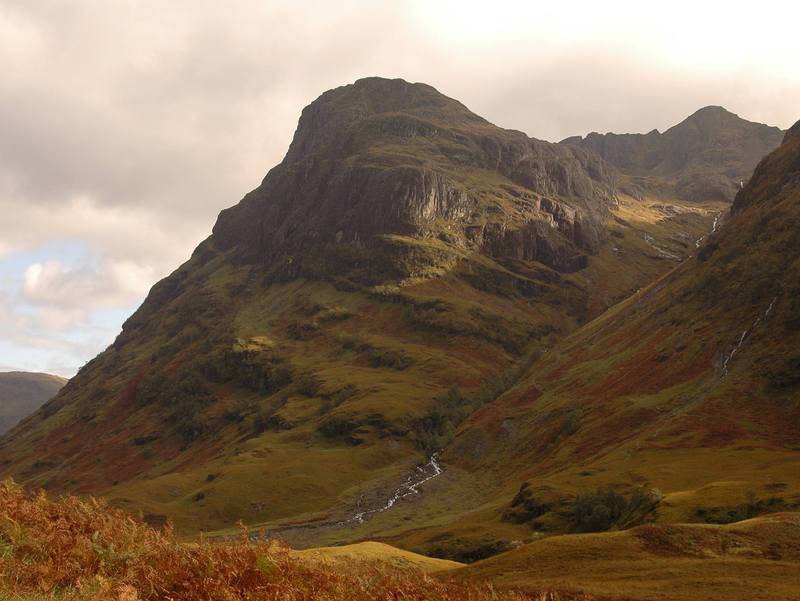
The Three Sisters of Glencoe, Autumn
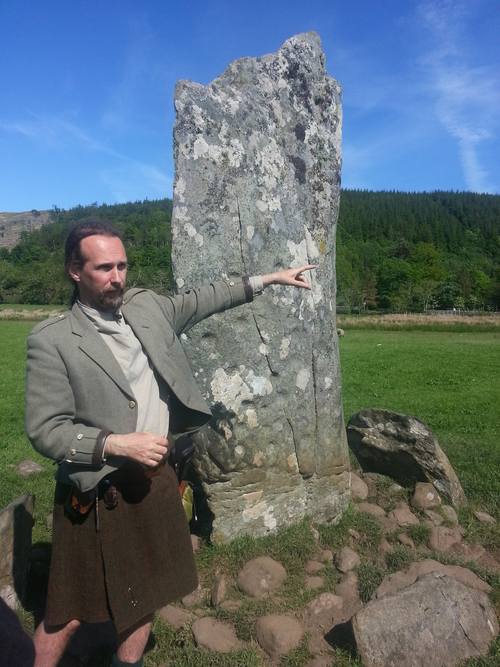
Bronze Age astronmony explained
Days Seven, Eight and Nine
We'll spend three days exploring this rich area, one of the densest archaeological landscapes in Scotland: Gleann Cille Mhàirtin, home to an astonishing array of stone circles, cairns, a henge, carved Celtic crosses and Iron-Age forts covering 6000 years. We will also visit a hidden holy well and the biggest collection of Neolithic rock art in Celtdom. While it is theoretically possible there is a guide on the planet that knows the Glen better than me, it is unlikely: I lived amongst these stones for five years.
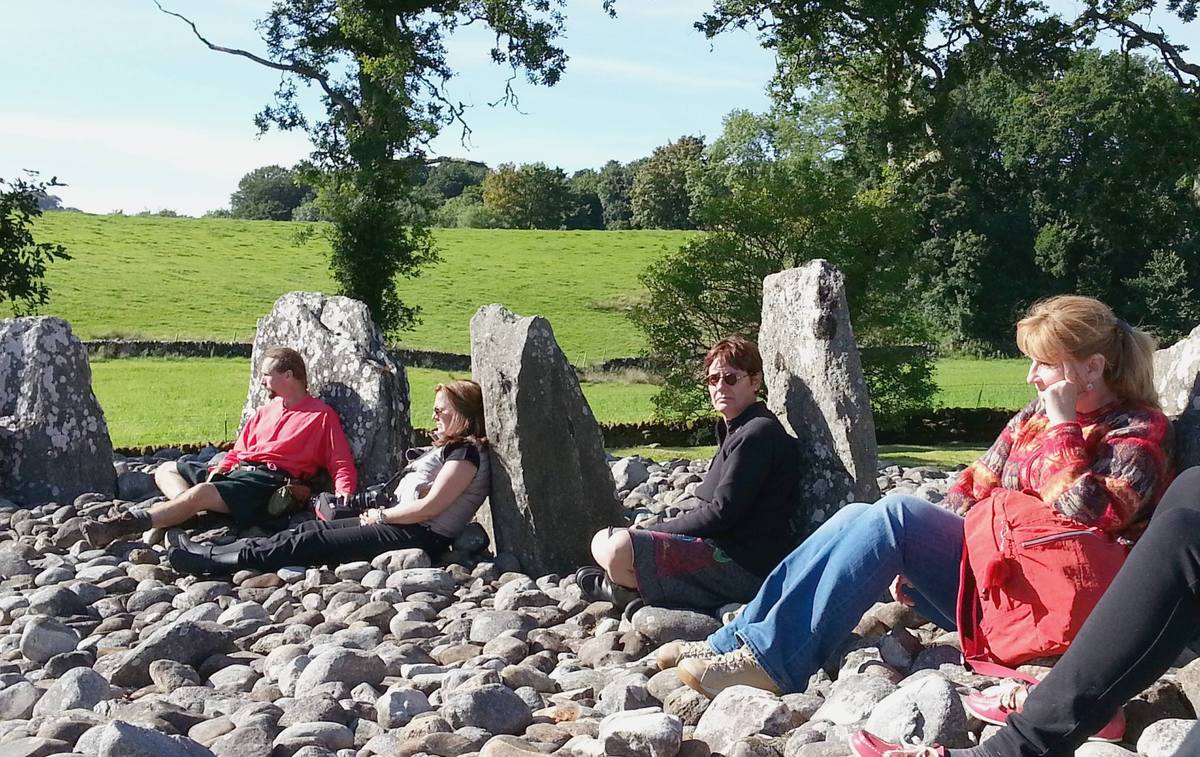
A moment's reflection in a stone circle.
©Tour guest Loreen Costa.
There are places relatively modern, where a strong sense and understanding of the human spirit can be found. We'll visit a couple of those too.
You'll get an opportunity to hike in the North Atlantic Oak Woodlands, stunningly beautiful and now recognised as an ecologically significant powerhouse of nature. The sea views aren't bad either!
I've added an extra day to this year's tour. This is the place we will spend that time, adding in sites I have never taken pilgrims to before. We'll visit about fifteen sites in total in The Glen.
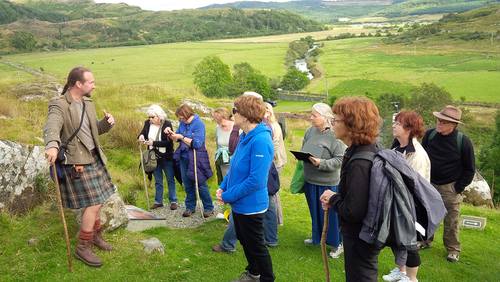
At Dùn Add.
©Tour guest Pam Payne.
Day Ten
As we leave mainland Argyll we'll hold our Morning Circle at one of the now familiar standing stone sites. On our way north we'll see if we can find an almost forgotten holy well, tidy it and make an offering. You'll get some time in An t-Òban to stock up on items not available in the remoteness of the islands, then we will take the ferry across the beautiful Firth of Lorn to the wild and unspoilt Isle of Mull for a scenic drive through the mountains. If the ferry timing is with us, we'll stop at Duart Castle, the seat of Clan Maclean and the home fo the chief, where I am clan seanachaidh (storyteller).
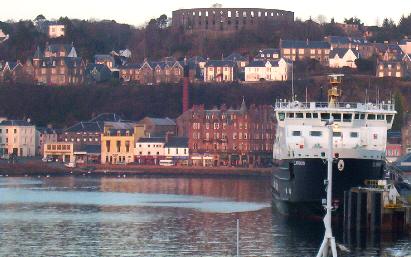
Òban, "Gateway to the Isles".
Another short ferry ride takes us over to the holy isle of Iona where we will stay for the next three nights. This evening we will stroll to the ruined nunnery with its sheela-na-gig. You'll have time to attend the Iona Community's evening ceremony of welcome in the Abbey, if you would like.
The smell of the breeze here in Iona is so clean because it last touched land in the Caribbean. It smells of... nothing, or perhaps the sea.
Iona has been a place of pilgrimage for at least 1500 years. You'll understand why after spending time there.
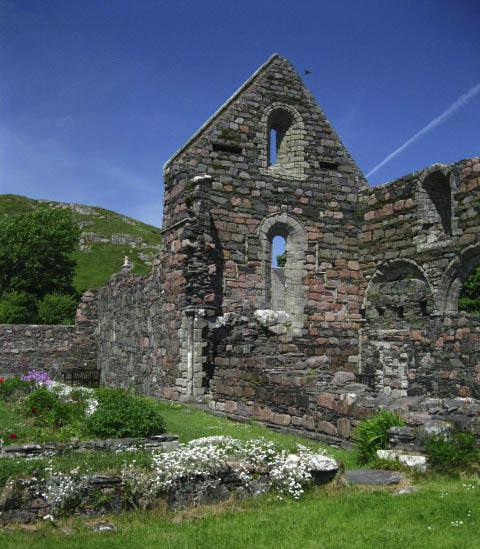
Iona Nunnery
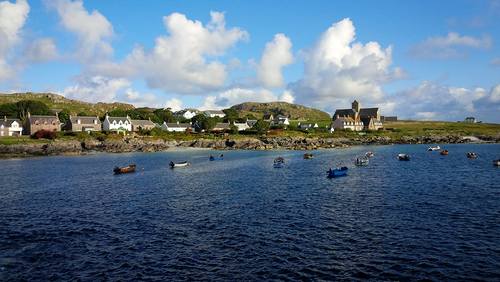
Iona
© Tour guest Pam Payne.
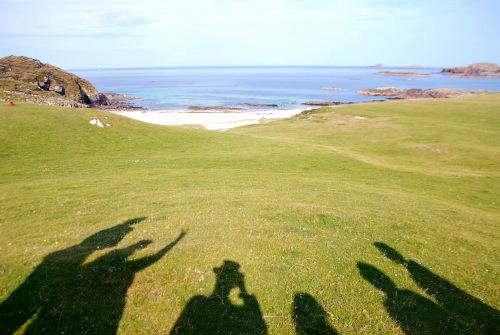
The group, Iona
Days Eleven and Twelve
Generally on Iona, the programmed activities are optional and have solo time built around them. Iona needs to be found at your pace. On our first morning, we will hike the pilrimage route to the "Bay of the Curragh" where Calum Cille (Saint Columba) first landed and where you might find beautiful Iona greenstones. You might choose to walk the labyrinth. After lunch there will be a free afternoon when you can visit the craft studios and bookshops in the village, or find a sandy beach on which to journal.
This morning you can experience the ancient hand-craft of making Bride's or St Brigit's Crosses. After, you can climb the sacred hill on the island to the Well of the Young and place the crosses in the waters. This afternoon there is the option to take to the sea by sail-boat in this sea-kingdom.
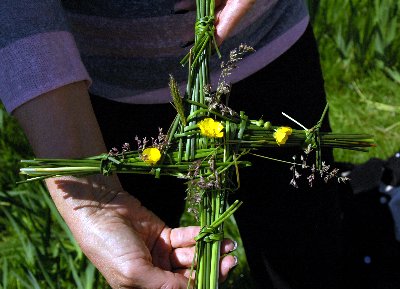
Making Bride's Crosses
This evening, I will host a
formal Cèilidh of local Tales, with harp. This is a public, ticketed event that has become something of a tradition over the years of visiting Iona, keeping certain Tales alive for both locals and visitors.
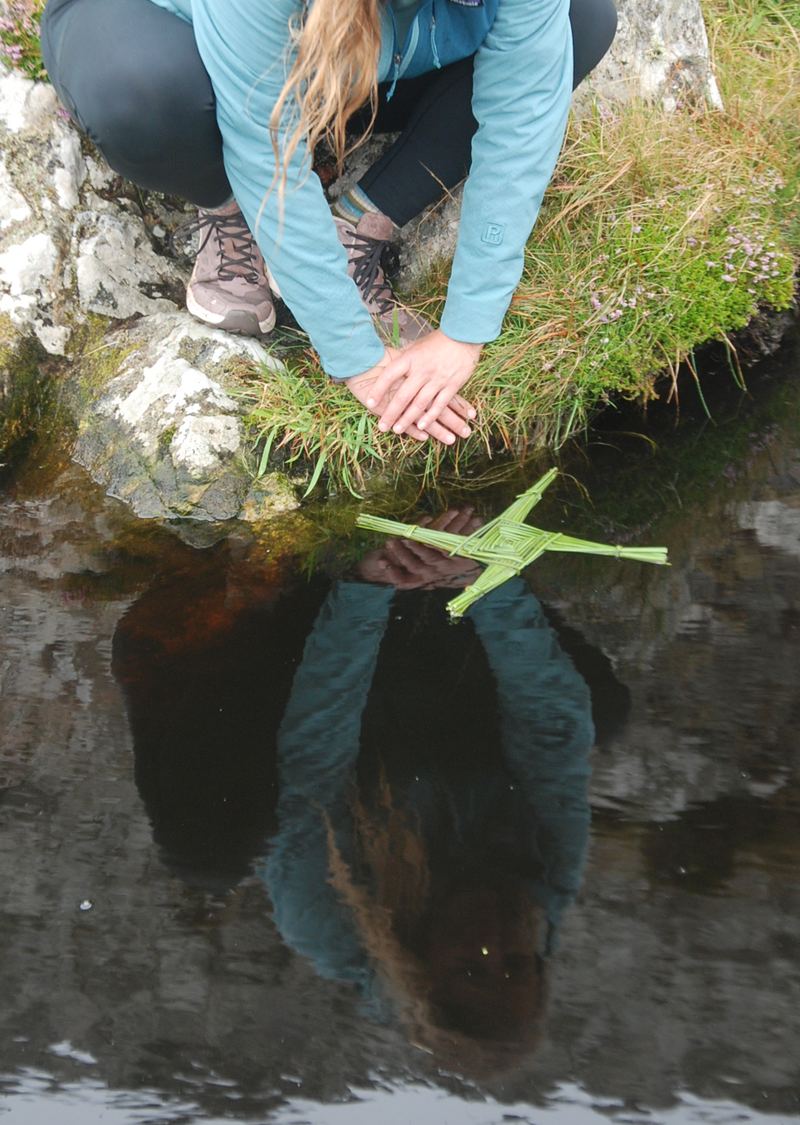
Leaving our Brigit's Crosses in the Well of Ages
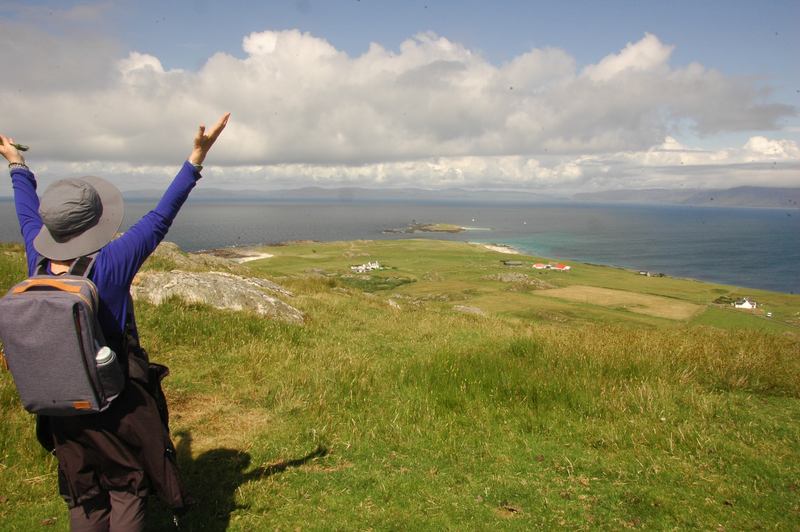
Dun Ì © Jane Duffy
Day Thirteen
Our last day, but a full one! Leaving the west and making our way back to Edinburgh there are some places that we'll want to stop, places that show different forms of Celtic beliefs - a pre-Catholic Saint's parish from the 700s, complete with healing stones, and in a land painted by pre-Raphaelites we'll visit one of the few well documented fairy hills. It will make a fine place to hold our closing circle.
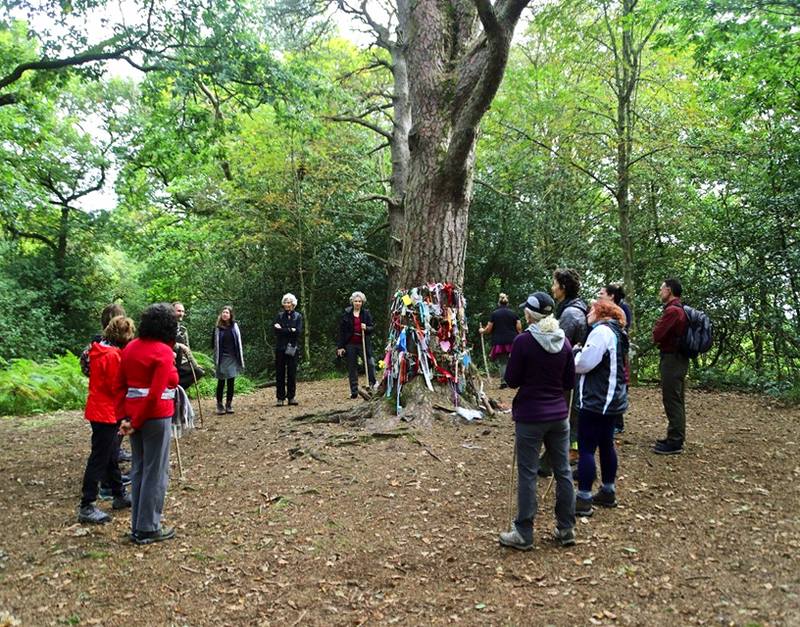
Contemplating the tree sacred to the fairies © Hamish Burgess
Our pilgrimage will end with a journey of an hour or so for you to mentally adjust back to 'un-civilisation', arriving in Edinburgh around five o' clock. A time for fond farewells.